
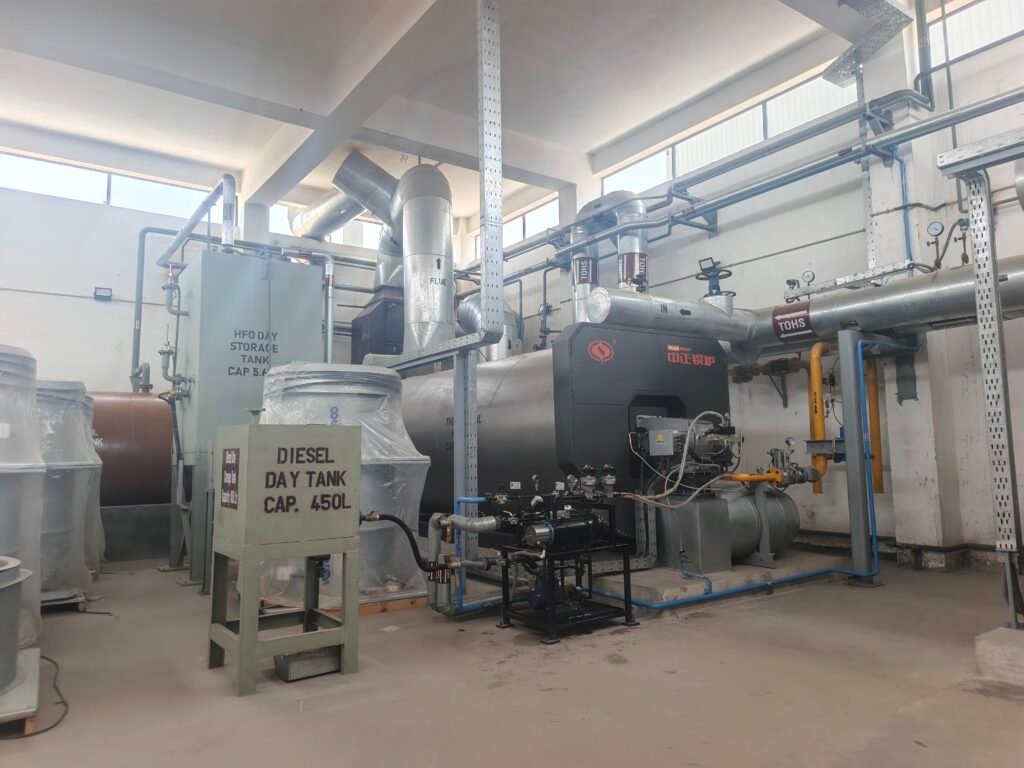
MHN Engineers delivers industrial thermal fluid optimization through the design, installation and commissioning of thermal oil heater piping systems for textile and industrial plants across Faisalabad. Our closed-loop thermal oil systems provide consistent, high-temperature heat for production processes, while careful sizing, welded piping and correct start-up procedures protect the fluid and keep fuel use under control.
What Is Industrial Thermal Fluid Optimization?
Industrial thermal fluid optimization means getting stable process heat from your thermal oil system at the lowest fuel cost and the lowest risk. It covers heater sizing, circulation flow, piping layout, insulation, oil quality and operating procedure. When these parts are matched to each other, the oil stays stable, the heater runs close to its design efficiency and your production temperature holds steady through every shift.
Poorly planned systems do the opposite. Overheated oil forms carbon, weak circulation creates hot spots on heater tubes, and badly insulated pipes waste heat. A properly engineered installation prevents these problems from the first day.
Our Thermal Oil Heater Services
- Thermal Oil Heater Installation: Complete system setup including heater, piping and expansion tanks
- Insulated Piping Networks: High-temperature piping with thermal insulation for energy efficiency
- Circulation Pump Integration: Sizing and installation of oil circulation systems
- Commissioning and Testing: Full system start-up, leak testing and performance validation
- Oil Flushing and Replacement: System cleaning and oil change as part of ongoing maintenance support
Industries We Serve
Thermal oil heating is essential for textile dyeing, stentering and finishing operations, as well as chemical and food processing plants. We work at client sites in Faisalabad, Lahore, Sheikhupura and across Punjab, and every project follows the same industrial thermal fluid optimization approach: match the system to the real process load, then protect the fluid for the long term.
What We Check Before Designing Your Thermal Oil System
Good design starts with data, not assumptions. Before we draw a single line, our engineers collect the information that drives every industrial thermal fluid optimization decision.
Process Heat Demand
List every heat user, its duty, its operating temperature and how many run together at peak. Users rarely all peak at the same moment, so sizing on the sum of maximums wastes capital and fuel.
Plant Layout and Pipe Routing
We measure the distance from heater to users, elevation changes and the space available for expansion loops and supports. Shorter, simpler runs lose less heat and need less pumping power.
Fluid and Operating Temperature
We confirm the thermal oil grade, its maximum bulk and film temperatures and the working temperature of your process. A safety margin keeps the oil away from its limit.
Fuel, Utilities and Safety Devices
We check fuel type, burner capability, electrical supply, expansion tank location, venting and emergency shutdown. These items affect both cost and safety.
A short site survey covering these four points saves weeks during installation and prevents rework later. That is why we treat the survey as the first step of industrial thermal fluid optimization.
Thermal Oil Heating vs Steam Heating
Many plants ask whether thermal oil or steam suits their process. The answer depends on temperature, pressure and maintenance preference.
Pressure and Temperature
Thermal oil systems reach high process temperatures at low pressure, while steam needs very high pressure to deliver the same temperature. Lower pressure means simpler vessels and a safer working environment.
Water Treatment and Maintenance
Steam systems need water treatment, blowdown and condensate management. Thermal oil systems avoid these tasks, but they need regular oil testing and clean circulation. Industrial thermal fluid optimization focuses on exactly that: keeping the oil healthy so the system runs for years with few surprises.
Choosing the Right System
Textile dyeing, stentering, chemical reactors and food processing often favour thermal oil because they need steady high temperature. Low-temperature heating may suit steam better. We help you compare both on cost, safety and process needs before you decide.
Why Choose MHN Engineers for Industrial Thermal Fluid Optimization
Our engineers size thermal oil systems precisely to your process load, avoiding the energy waste of an oversized system or the reliability issues of an undersized one. We work on-site, so our team sees your actual plant conditions, layout and shutdown windows before finalizing the design.
You get one accountable team for piping fabrication, welding, insulation, installation and commissioning. That means fewer handovers, clearer responsibility and a system that is ready to run safely at operating temperature.
Our Thermal Oil Heater Piping Process
We size thermal oil systems based on your actual process heat demand, factoring in heater output, circulation flow rate and heat loss across the piping run. Piping is fabricated with expansion loops to accommodate thermal growth, and every joint is welded rather than threaded to prevent oil leakage at operating temperature.
After installation, the system undergoes a controlled oil-fill and air-purge procedure, followed by a gradual heat-up cycle to manufacturer specification before reaching full operating temperature. This prevents thermal shock damage to the heater and piping, and it is a key step in industrial thermal fluid optimization because trapped air and moisture are removed before they can damage the oil.
Why Correct Sizing Matters
An undersized thermal oil system struggles to maintain process temperature during peak demand, while an oversized one wastes fuel and increases capital cost unnecessarily. Accurate load calculation is the foundation of industrial thermal fluid optimization, because every later decision on flow rate, pump selection and insulation depends on it. We calculate loads precisely so your system matches actual production needs.
Benefits of Industrial Thermal Fluid Optimization
A well-optimized thermal oil system pays back through lower running cost and fewer problems. The benefits show up quickly and continue for the life of the plant.
Lower Fuel Consumption
When flow, insulation and heater loading are matched to the process, the burner does not need to fire harder than necessary. Clean tube surfaces and tight insulation keep more heat in the oil and less in the plant air, which reduces fuel use on every production shift.
Longer Oil Life
Controlled temperature and clean circulation slow oil degradation. Thermal oil that stays within its limits lasts longer, so you replace it less often and spend less on top-ups and disposal.
Stable Process Temperature
Steady heat means consistent dyeing, drying and finishing quality. Fewer temperature swings also mean fewer rejected batches and less pressure on operators.
Maintenance and Fluid Testing for Industrial Thermal Fluid Optimization
Thermal oil degrades over time and requires periodic testing and replacement. Regular laboratory sampling shows changes in viscosity, flash point and acidity before they cause damage, so you can plan a top-up or partial renewal instead of facing an emergency. We advise clients on oil sampling schedules and can perform system flushing and oil replacement as part of ongoing maintenance support.
Consistent maintenance also protects your investment. Clean oil, clean filters and healthy insulation keep the heater efficient, reduce unplanned stops and extend the working life of the whole system.
Signs Your Thermal Oil System Needs Attention
Many problems give early warnings. Watch for these signals in your plant:
- Heater outlet temperature rising at the same production load
- Darker oil colour or a burnt smell near the expansion tank
- Higher fuel use without an increase in production
- Pressure drop rising across filters or the heater
- Pump noise, vibration or small leaks at flanges
- Frequent oil top-ups
One sign deserves a check. Two or more together usually mean a developing fault that is cheaper to fix now than after a shutdown.
Common Problems Industrial Thermal Fluid Optimization Solves
Many thermal oil systems run for years with hidden losses that nobody measures. Industrial thermal fluid optimization finds those losses and corrects them before they turn into shutdowns, fuel waste or fire risk. These are the four problems we see most often.
Oversized or Undersized Heaters
A heater chosen on guesswork either cycles constantly or cannot hold temperature at peak load. Both cases waste fuel and stress the oil. We compare heater output with your real process demand and recommend the right size.
Poor Circulation and Hot Spots
Low flow lets oil stay too long against hot tube walls, which forms carbon. Partly closed valves, worn pumps and blocked strainers are common causes. Restoring correct flow protects both the oil and the heater coil.
Heat Loss Through Damaged Insulation
Wet, missing or oil-soaked insulation on pipes, flanges and valves loses heat and creates a safety risk. Repairing it lowers surface temperature and lets the burner work less.
Degraded or Contaminated Oil
Oil that has oxidized or picked up moisture loses its heat transfer ability and thickens over time. Regular sampling shows the trend, so we can plan filtration, flushing or partial replacement in time.
Safety Standards We Follow
Hot oil systems need careful design and safe procedures. Our work follows recognised references such as DIN 4754 for heat transfer systems, ASME B31.3 for process piping and NFPA 87 for fluid heaters. Welded joints, correct expansion allowance, proper venting and tested safety devices are part of every installation, and they are also essential to industrial thermal fluid optimization because a safe system is a stable system.
Commissioning Checklist for a Thermal Oil System
A careful start-up decides how long the system and the oil will last. Our commissioning follows a clear sequence, and each step supports industrial thermal fluid optimization from the first day.
- Inspect welds, supports and expansion loops
- Pressure test and leak test the piping
- Check pump rotation, alignment and strainers
- Fill the system with oil and purge trapped air
- Circulate oil cold and confirm flow and pressure
- Raise temperature in stages so moisture leaves safely
- Test safety devices, alarms and shutdowns
- Record baseline readings for future comparison
These baseline readings become the reference for every later inspection and every future industrial thermal fluid optimization review. Without them, nobody can tell whether the system is improving or slowly drifting.
Areas We Serve
We carry out thermal oil heater piping and maintenance work on-site for textile mills, chemical plants and food processing units in Faisalabad, Lahore, Sheikhupura and across Punjab. Because we work at your facility, we can plan industrial thermal fluid optimization around your shutdown windows and production schedule, and our team stays on-site until the system is tested and running.
Questions to Ask Before You Hire a Thermal Oil Contractor
The cheapest quotation is rarely the lowest-cost option. Ask these questions before you decide:
- How will you size the heater and pumps for my process load?
- Are all joints welded, and how will thermal expansion be handled?
- What is your oil-fill, air-purge and heat-up procedure?
- Which safety devices and tests are included?
- Who handles oil sampling and maintenance after commissioning?
A contractor who answers these clearly understands industrial thermal fluid optimization as a complete process, not only a piping job. Ask for the answers in writing so both sides agree on scope, responsibility and acceptance tests before work begins.
Industrial Thermal Fluid Optimization for Textile, Chemical and Food Plants
Every industry uses thermal oil differently, so the priorities change from plant to plant.
Textile Mills
Dyeing, stentering and finishing need steady temperature across long production runs. Stable oil temperature, a core goal of industrial thermal fluid optimization, supports consistent results and reduces reprocessing.
Chemical Plants
Reactors and heat exchangers need controlled heating and safe operation at high temperature. Correct design, welded piping and careful fluid care are essential.
Food Processing Units
Plants in this sector value stable temperature, clean operation and low-pressure heating. A tidy, well-insulated system supports hygiene and worker safety.
Whatever your sector, industrial thermal fluid optimization starts with the same question: what heat does your process really need? Once that is clear, the heater, piping, pumps and oil can be matched to it.
Next Steps for Better Thermal Oil Performance
If your system is new, begin with a site survey and a written scope. If it is already running, begin with an oil sample and a walk-through of the heater, pipes and insulation. Either way, industrial thermal fluid optimization gives you measurable gains in fuel use, stability and safety.For a deeper look at fuel savings and heater performance, read our thermal oil system efficiency guide.
Frequently Asked Questions
How often should thermal oil be tested?
At least once a year, and more often if the system has overheated, lost flow or received a large top-up. Regular results help you spot trends early.
Can you improve an existing thermal oil system?
Yes. We can review heater loading, circulation flow, insulation and oil condition, then recommend practical industrial thermal fluid optimization steps such as flushing, filtration, insulation repair and pump correction.
What is industrial thermal fluid optimization used for?
It is used to keep thermal oil systems efficient, stable and safe. It covers sizing, piping, insulation, circulation and oil quality so your process gets steady heat at a low fuel cost.
How long does thermal oil heater piping installation take?
It depends on system size, pipe length and site conditions. After a site survey we give a written schedule, and we plan industrial thermal fluid optimization work around your shutdown windows wherever possible.
What temperature range do thermal oil systems use?
Many systems run in the 200 to 300 degrees Celsius range, depending on the fluid and the process. Always stay within the manufacturer’s limit for bulk and film temperature.
Why must thermal oil piping be welded instead of threaded?
Heating and cooling cycles loosen threaded joints over time, and hot oil leaks are a fire risk. Welded joints hold tight at operating temperature and make the system safer.
How does industrial thermal fluid optimization reduce fuel bills?
Correct sizing, clean heat transfer surfaces and good insulation reduce wasted heat. Industrial thermal fluid optimization lets the burner fire only as hard as the process needs.
What insulation is used on thermal oil pipes?
We select insulation suited to the operating temperature, typically mineral wool with metal cladding. Leaks must be repaired quickly, because oil-soaked insulation can ignite.
Can you service thermal oil systems installed by other contractors?
Yes. After a site survey we review heater loading, piping, insulation and oil condition, then recommend practical repairs and improvements.
How often should thermal oil be replaced?
Replace oil based on laboratory results, not a fixed date. With regular testing, industrial thermal fluid optimization often extends oil life by catching problems early.
What causes carbon buildup in thermal oil heaters?
Overheating, oxygen contact and low flow are the main causes. Good industrial thermal fluid optimization controls all three and keeps tube surfaces clean.
Get a Free Consultation
Need a thermal oil heating system or help with industrial thermal fluid optimization at your plant?
Contact us at +92-300-8412275 or info@mhnengineers.com for a free consultation.