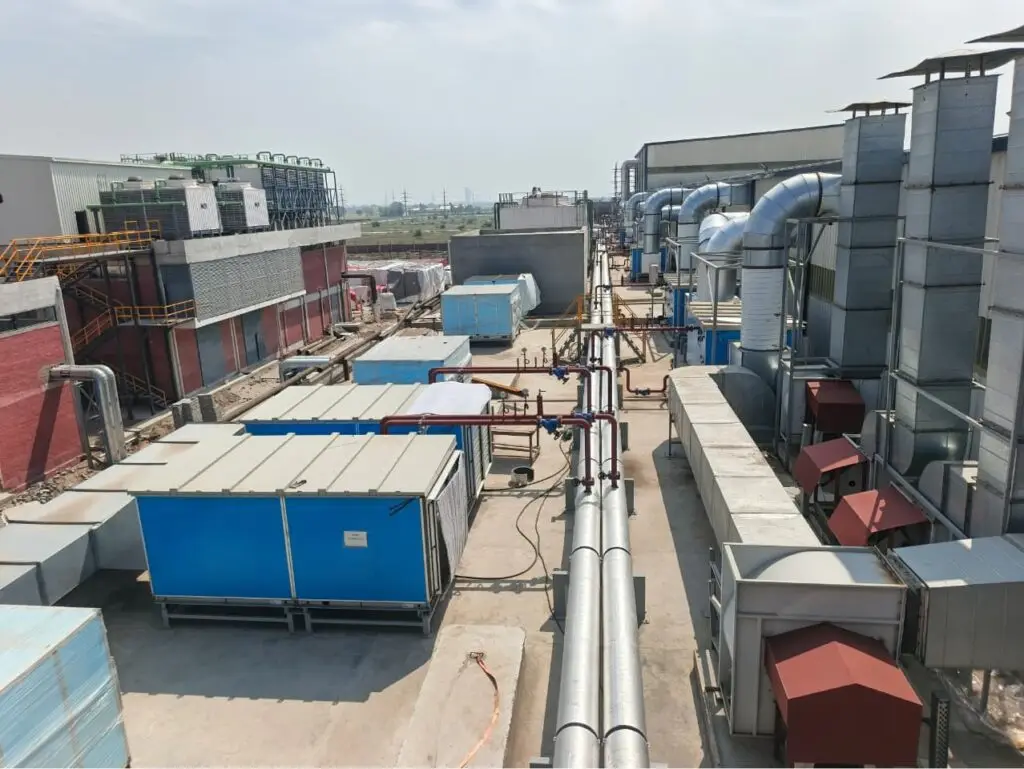
Cooling tower maintenance is the ongoing discipline that keeps industrial and chemical processing plants running safely. Cooling towers form the backbone of heat rejection in these facilities, quietly cycling large volumes of water to keep production lines, boilers, and chillers running at safe temperatures. Many facility managers only think about them when something goes wrong. Cooling tower maintenance is not a one-time task; it is an ongoing discipline that protects equipment, energy costs, and plant safety over the long run.
Why Regular Cooling Tower Maintenance Matters
Skipping routine industrial cooling maintenance rarely saves money, it usually just delays a bigger, costlier problem. Left unchecked, cooling towers develop scale buildup on heat transfer surfaces, corrosion in structural components, and biological growth such as algae in stagnant water zones. Each issue quietly reduces thermal efficiency, forcing compressors and pumps to work harder and driving up energy bills. In the worst cases, poor maintenance leads to unplanned downtime, regulatory violations, or safety hazards for plant staff. A structured maintenance plan keeps these risks in check and extends the operational life of the entire cooling system.
Cooling Tower Operation & Maintenance Checklist
Effective cooling tower operation and maintenance follows a predictable rhythm rather than a reactive one. Daily checks cover fan and motor sound, basin water level, makeup water flow, and visible leaks. Weekly checks cover drift eliminators, spray nozzles, and fill media for blockages or debris. Monthly checks cover water treatment chemistry such as pH, conductivity and biocide levels, along with gearbox lubrication and belt tension. Quarterly and annual checks include structural inspection for corrosion, full basin cleaning, motor bearing replacement, and thermal performance testing against design specifications. Documenting each inspection builds a maintenance history that helps predict failures before they happen, rather than reacting after production is already affected.
Common Cooling Tower Problems & Repair Solutions
Even well-run facilities eventually face cooling tower maintenance and repair needs. Frequent issues include fan and motor failures from bearing wear or misalignment, which reduce airflow and cooling capacity; fill media damage caused by scale, fouling, or physical breakage, which disrupts water distribution; corrosion of the tower structure, particularly in units exposed to humid or chemically aggressive environments; and water treatment imbalances, which accelerate scaling or microbial growth if not corrected quickly. Timely repair of these components prevents small faults from cascading into full system failures during peak production periods.

Industrial & Chemical Plant Cooling Equipment Maintenance
Chemical plant cooling equipment maintenance carries extra complexity because these systems often interact with thermal fluid loops, hot oil circuits, and high-pressure process lines. A cooling tower serving a chemical process cannot be treated the same as one cooling a commercial HVAC system, since process fluids, higher heat loads, and stricter safety codes all raise the stakes. Plants that integrate thermal fluid systems alongside their cooling towers benefit from coordinated maintenance schedules, so that efficiency gains on one side of the system are not undone by neglect on the other.

Best Practices & Preventive Maintenance Tips

A few habits separate high-performing plants from those constantly firefighting equipment issues: maintaining a written preventive maintenance calendar rather than relying on memory, keeping water treatment chemistry within manufacturer-recommended ranges at all times, training operators to recognize early warning signs like unusual vibration or falling temperature differentials, and partnering with a qualified maintenance provider for annual deep inspections that go beyond routine in-house checks.
When to Call Professional Maintenance Services
Some maintenance work, such as routine cleaning, visual inspections, and basic chemical dosing, can be handled by an in-house team. But structural repairs, gearbox overhauls, thermal performance audits, and chemical plant cooling equipment maintenance generally call for specialized expertise. MHN Engineers works with industrial and chemical plants to design, inspect, and maintain cooling towers and connected thermal systems, helping avoid the downtime and safety risks that come from deferred maintenance.
Cooling Tower Maintenance Costs & Budgeting
Budgeting for cooling tower maintenance helps facility managers avoid the higher costs that come with emergency repairs. Routine cooling tower maintenance, including water treatment, mechanical inspections, and structural upkeep, typically costs far less than replacing a fouled fill pack, a failed motor, or a corroded basin after a breakdown.
Many plants schedule cooling tower maintenance contracts annually, spreading costs across the year while giving technicians the chance to catch small issues, such as scale buildup or fan imbalance, before they escalate into unplanned shutdowns. Tracking maintenance spend over time also helps justify capital upgrades that lower long-term operating costs.
Seasonal Cooling Tower Maintenance Considerations
Cooling tower maintenance needs shift with the seasons, and plants that adjust their schedules accordingly avoid many avoidable failures. Before summer peak loads arrive, technicians should confirm that fill media, spray nozzles, and fans are clean and balanced, since cooling demand and water evaporation rates climb sharply in hot weather.
In colder climates, winterization is an equally important part of cooling tower maintenance. Basin heaters, freeze protection controls, and idle-cell water management all need to be checked before temperatures drop, since a frozen or cracked basin can take a tower offline for weeks.
Facilities that run cooling towers year-round in variable climates often benefit from a seasonal maintenance calendar. Pairing routine inspections with these weather-driven adjustments reduces the risk of costly downtime at the times demand is highest.
Cooling Tower Maintenance and Water Treatment Compliance
Water treatment chemistry is one of the most heavily regulated parts of cooling tower maintenance, since poorly managed systems can create conditions for Legionella and other waterborne bacteria to grow. Many local health codes now require documented water treatment logs, regular biocide dosing records, and periodic testing as part of routine cooling tower maintenance programs.
Plant operators should keep clear records of pH, conductivity, biocide levels, and inspection dates, since these logs are often the first thing auditors or insurers request after an incident. Building strong documentation habits into a cooling tower maintenance program not only supports compliance but also gives facility managers a clear history to diagnose recurring problems faster.
Conclusion
Cooling tower maintenance is not just a checklist item, it is a continuous investment in plant reliability, energy efficiency, and worker safety. Whether you manage a single tower or a network of industrial cooling systems, a consistent maintenance and repair strategy pays for itself many times over in avoided downtime and extended equipment life.
Choosing a Cooling Tower Maintenance Provider
Selecting the right partner for cooling tower maintenance makes a measurable difference in equipment lifespan and safety outcomes. Facility managers should look for providers with documented experience across mechanical, structural, and water treatment aspects of cooling tower maintenance, rather than a single specialty.
Ask any prospective cooling tower maintenance provider about their inspection checklists, response times for emergency repairs, and how they document findings after each visit. Providers who share clear reports with photos, measurements, and specific recommendations make it far easier to plan budgets and track the long-term condition of equipment.
It also helps to ask how a provider handles parts sourcing for older or discontinued cooling tower models, since delays in getting the right fill media, drift eliminators, or motors can turn a routine repair into extended downtime. A dependable cooling tower maintenance partner will have established supplier relationships and realistic lead times for common replacement parts.
Cooling Tower Maintenance Documentation & Recordkeeping
Good documentation turns cooling tower maintenance from a set of one-off tasks into a searchable history that helps predict future problems. Recording every inspection, repair, and part replacement builds a timeline that shows which components fail most often and why.
Digital maintenance logs make cooling tower maintenance records easier to search and share across shifts, especially at facilities with multiple towers or multiple contractors involved. Photos attached to each entry also help new technicians recognize normal wear versus a developing fault.
Consistent recordkeeping additionally supports warranty claims and insurance reviews, since many manufacturers require proof of scheduled cooling tower maintenance to honor coverage on major components such as fill media, drive motors, and gearboxes.
Ultimately, the plants that treat cooling tower maintenance as a core operating discipline, rather than an afterthought, consistently see lower energy costs, fewer emergency repairs, and longer equipment life across their entire cooling water system.
Frequently Asked Questions
How often should a cooling tower be maintained?
Daily visual checks, weekly component inspections, and a full structural and performance audit at least once a year are generally recommended, though high-load industrial systems may need more frequent attention.
What is included in cooling tower maintenance?
Typical maintenance covers water treatment monitoring, fill media and nozzle cleaning, fan and motor inspection, structural corrosion checks, and periodic thermal performance testing.
Can poor cooling tower maintenance affect other plant equipment?
Yes. Reduced cooling efficiency forces compressors, chillers, and thermal fluid systems to work harder, increasing energy use and the risk of failure elsewhere in the plant.